
Back to Resources | Jump to Contents
When you observe a person or group to see what they are like, a lot of what you are observing is communication. Tone, words and vocabulary, how emails are handled, body language. In many ways, communication is the vehicle for leadership.
This section includes empathy, compassion, difficult conversations, creating workplace culture through healthy communication.
In addition to everything I’ve mentioned in the other sections about emotional intelligence, psychological safety, story stewardship, The Rumble, etc – here are some great books dealing directly with healthy communication.
Check out other leadership topics on the main Resources page.
- Difficult Conversations: How to Discuss What Matters Most, by Douglas Stone, Bruce Patton, and Sheila Heen
- Radical Candor: Be a Kick-Ass Boss Without Losing Your Humanity, by Kim Scott
- Crucial Conversations: Tools for Talking When Stakes are High, by Joseph Grenny, Kerry Patterson, Ron McMillan, Al Switzler, Emily Gregory.
- Bonus Materials on Healthy Communication for Leaders
Difficult Conversations: How to Discuss What Matters Most, by Douglas Stone, Bruce Patton, and Sheila Heen
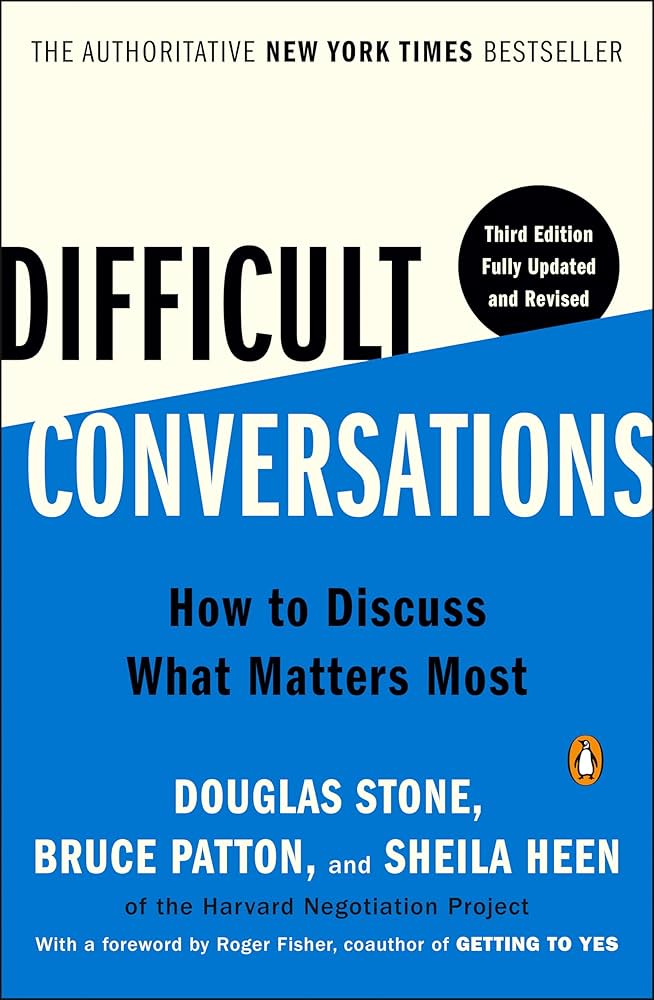
A conversation about something as mundane as document formatting or office layout can be difficult. On the surface, these are not complex issues. Who parks where, how to maintain the spreadsheet, who brought the coffee last time, how to load the dishwasher: on the surface, these are simple. And yet…!
When a conversation is about more than just the simple facts, we have to look deeper to see what else might be going on. When we do that, we realize there are multiple layers to every conversation.
Some of my fave quotes from the book (and a heads up in case you think this is a book about beating everyone in arguments):
- “Difficult conversations are almost never about getting the facts straight. They’re about conflicting perceptions, interpretations, and values.”
- “Difficult conversations do not just involve feelings, they are at their very core about feelings.”
“Feelings are not some noisy by-product of engaging in difficult talk, they are an integral part of the conflict…Unexpressed feelings can block the ability to listen…We often translate our feelings into judgements, attributions, characterizations, and problem-solving.” - “Engaging in a difficult conversation without talking about feelings is like staging an opera without the music.”
- “People almost never change without first feeling understood.”
We tend to focus on what’s above the waterline, “the facts” (the content or topic) of the conversation. But if it were just about that, it wouldn’t really be difficult. Two adults are smart enough to strategize and decide ways to improve performance; how to keep the microwave clean in the break room; what background colour to use on the slides.
This is not rocket science. These are not complex issues. What makes a conversation “difficult” isn’t the topic or the facts. It’s the feelings.
Let’s say the topic was rocket science or brain surgery. Scientists and doctors talk about science and medicine all the time without getting upset. Lawyers and philosophers can often argue their cases without taking anything personally. The complexity of the topic is not what makes it difficult.
What’s going on beneath the surface and what to do about it?
That’s what this book is all about. How to turn a difficult conversation into a learning conversation. This all takes what I call the fundamental skill of adulting: emotional regulation. Which is one of the four main dimensions of emotional intelligence (EQ).
It is a fundamental rule: feelings crave acknowledgement.
Like free radicals, feelings wander around the conversation looking for some acknowledgement to hook onto. They won’t be happy until they get it, and nothing else will do.
Unless they get the acknowledgement they need, feelings will cause trouble in a conversation – like a kid desperate for attention, positive or negative” (p180 of my edition).
See also the reading list on EQ above!
Video Summary of Difficult Conversations
Radical Candor: Be a Kick-Ass Boss Without Losing Your Humanity, by Kim Scott
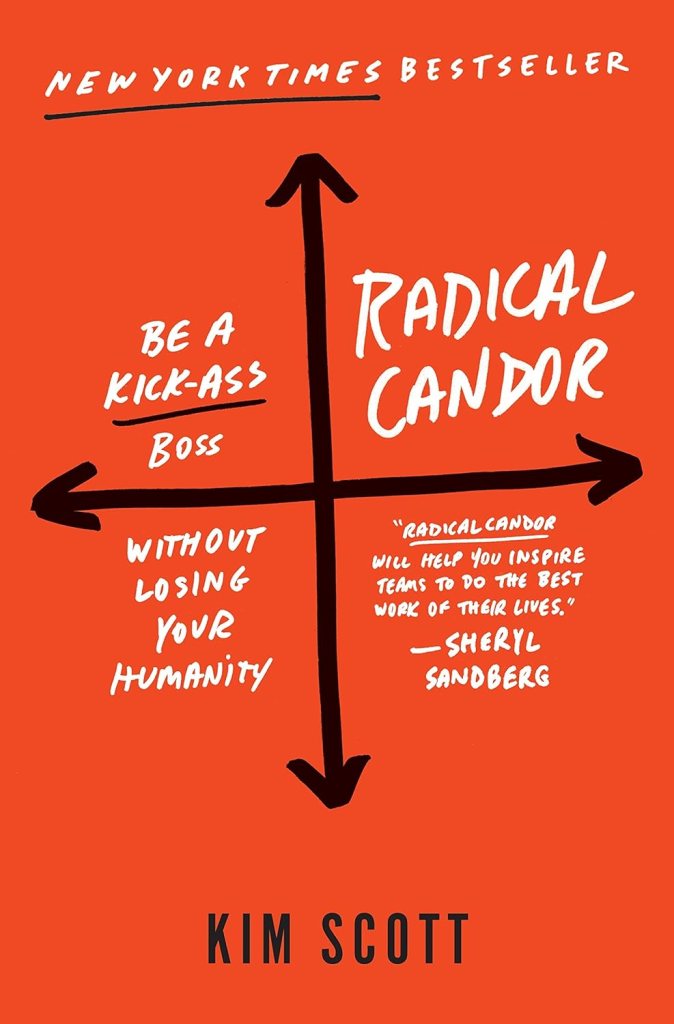
Another New York Times and Wall Street Journal bestseller for you!
“I raced through Radical Candor–It’s thrilling to learn a framework that shows how to be both a better boss and a better colleague. Radical Candor is packed with illuminating truths, insightful advice, and practical suggestions, all illustrated with engaging (and often funny) stories from Kim Scott’s own experiences at places like Apple, Google, and various start-ups. Indispensable.” ―Gretchen Rubin author of New York Times bestseller The Happiness Project
“Reading Radical Candor will help you build, lead, and inspire teams to do the best work of their lives. Kim Scott’s insights–based on her experience, keen observational intelligence and analysis–will help you be a better leader and create a more effective organization.” ―Sheryl Sandberg author of the New York Times bestseller Lean In
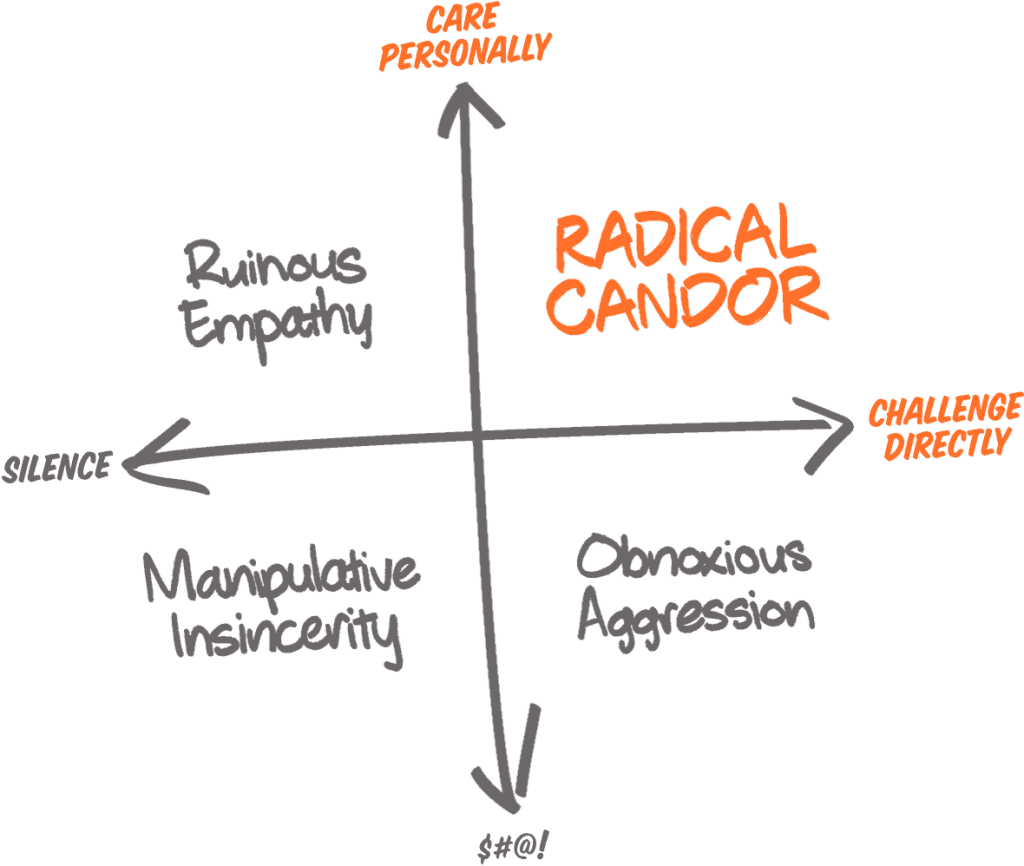
“Kim Scott has a well-earned reputation as a kick-ass boss and a voice that CEOs take seriously. In this remarkable book, she draws on her extensive experience to provide clear and honest guidance on the fundamentals of leading others: how to give (and receive) feedback, how to make smart decisions, how to keep moving forward, and much more. If you manage people–whether it be 1 person or a 1,000–you need Radical Candor. Now.” ―Daniel Pink author of New York Times bestseller Drive
The Radical Candor website has so many resources to offer as well.
Crucial Conversations: Tools for Talking When Stakes are High, by Joseph Grenny, Kerry Patterson, Ron McMillan, Al Switzler, Emily Gregory.
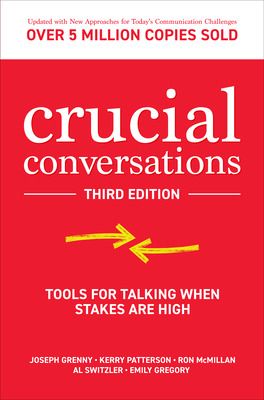
From the book’s website:
When stakes are high, opinions vary, and emotions run strong, you have three choices: Avoid a Crucial Conversation and suffer the consequences; handle the conversation poorly and suffer the consequences; or apply the lessons and strategies of Crucial Conversations and improve relationships and results.
Whether they take place at work or at home, with your coworkers or your spouse, Crucial Conversations have a profound impact on your career, your happiness, and your future. With the skills you learn in this book, you’ll never have to worry about the outcome of a Crucial Conversation again.
- Respond when someone initiates a crucial conversation with you
- Identify and address the lag time between identifying a problem and discussing it
- Communicate more effectively across digital mediums
Bonus Materials on Healthy Communication for Leaders
- Sympathy vs Empathy 3-min video
- Article – What is Active Listening? by Amy Gallo
- Brené Brown in Dare to Lead: “The Rumble“
- The Situation-Behavior-Impact (SBI) model for giving feedback
- video explaining SBI and giving examples
- article with examples
- Former Submarine Captain L. David Marquet on leading with intent to reach greatness:
Leadership | EQ | Communication | Culture | Psychological Safety
Group Dynamics | Healthy, High-Performing Teams | RESOURCES HOME
 Annalise