
Back to Resources | Jump to Contents
There’s a lot of talk out there about driving high-performance, but a lot of the time it comes at a very high cost for the humans involved. Burnout, toxic culture, chronic stress.
Many [old-fashioned] leaders are still of the mindset that it has to be this way. People who burn out are “weak”. Mental health is a luxury. Work-life balance is a myth. No wonder the younger generation looks at senior leaders of today and opt out of climbing the ladder to…a nice house with a white picket fence and chronic illness.
The good news is that the highest performing teams, who stay that way the longest, are actually the healthiest. For example, Google’s Project Aristotle that found its highest performing teams were the ones with the highest level of psychological safety.
Here’s a list of resources that can help you make this happen. Even if you’re a Special Forces commander in the military, where violence is a central task, you can build a healthy, high-performing team. Just ask former Delta Force Commander, Pete Blaber. Or nuclear submarine commander, L. David Marquet. Or Navy SEAL Rich Diviney!
See also: Resources for Leaders to Build Healthy Culture
Contents
- Books
- The Mission, the Men, and Me: Lessons from a Former Delta Force Commander, by Pete Blaber
- The Attributes: 25 Hidden Drivers of Optimal Performance, by Rich Diviney
- Reinventing Organizations: A Guide to Creating Organizations Inspired by the Next Stage in Human Consciousness, by Frederic Laloux
- Brave New Work: Are You Ready to Reinvent Your Organization? by Aaron Dignan
- Let My People Go Surfing: The Education of a Reluctant Businessman–Including 10 More Years of Business, by Yvon Chouinard
- Freedom, Inc.: How Corporate Liberation Unleashes Employee Potential and Business, by Mr. Brian M Carney and Isaac Getz
- Maverick: The Success Story Behind the World’s Most Unusual Workplace, by Ricardo Semler
- The Case for Good Jobs: How Great Companies Bring Dignity, Pay, and Meaning to Everyone’s Work, by Zeynep Ton
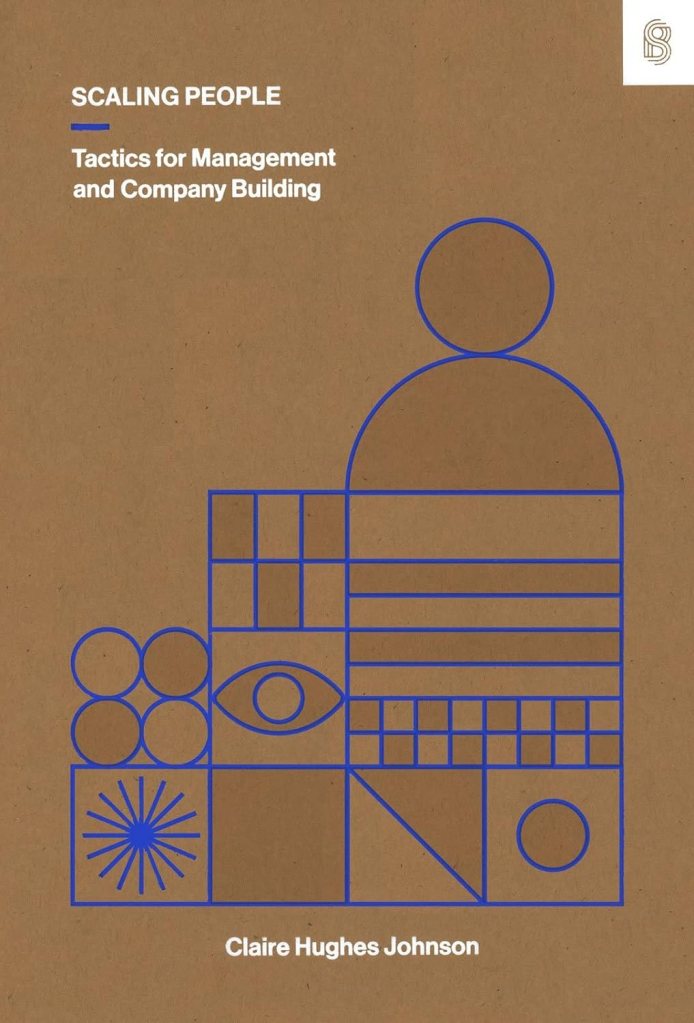
- Scaling People: Tactics for Management and Company Building, by Claire Hughes Johnson
- 🤕Case Studies: Unhealthy, high-performing
- 😀Case Studies: Healthy, high-performing
Books
The Mission, the Men, and Me: Lessons from a Former Delta Force Commander, by Pete Blaber
Pete Blaber was a commander in Delta Force, the most elite counter-terrorist organization in the world. Despite the fact that his job was to take part in some of the most dangerous, controversial, and significant military and political events of our time, he believed in creating the psychological safety for any member of his team to be able to contribute.
The book is full of cool stories about missions around the world, and yet it is totally relevant to mundane garrison work as well as civilian life.
You might think a military commander would succeed by following the rules, but Blaber is a champion of humoring one’s imagination and staying open to the unusual. This meant creating the conditions in which each team felt they could bring their talents, experience and idea to a brainstorming session, and even suggest unorthodox solutions. Put a soldier in life-like gorilla costume to slow down an enemy convoy? “Tell me more.”
Other lessons:
- When in doubt, develop the situation: innovate, adapt and be audacious
- Always listen to the ‘Guy on the Ground’, the person actually interacting with the environment
- It’s not reality unless it’s shared: how do we organize, communicate and lead to ensure the team shares a reality or mental model
Summary of The Mission, the Men and Me
The Attributes: 25 Hidden Drivers of Optimal Performance, by Rich Diviney
From the Amazon writeup:
During 20 years as a Navy officer and SEAL, Rich Diviney was intimately involved in a specialized SEAL selection process, which whittled a group of hundreds of extraordinary candidates down to a handful of the most elite performers.
Diviney was often surprised by which candidates washed out and which succeeded. The seemingly “objective” criteria weren’t telling him what he most needed to know: who would succeed in one of the world’s toughest military assignments?
In working with and selecting top special operators for decades, Diviney saw that beneath obvious skills are hidden drivers of performance, surprising core attributes—including cunning, adaptability, courage, even narcissism—that determine how resilient or perseverant we are, how situationally aware and how conscientious.
These attributes explain how we perform as individuals and as part of a team. The same methodology that Diviney used in the military can be applied by anyone in their personal and professional lives, and understanding these attributes can allow readers and their teams to perform optimally, at any time, in any situation.
The book’s website is full of great resources too!
It Doesn’t Have to Be Crazy at Work, by Jason Fried and David Heinemeier Hansson
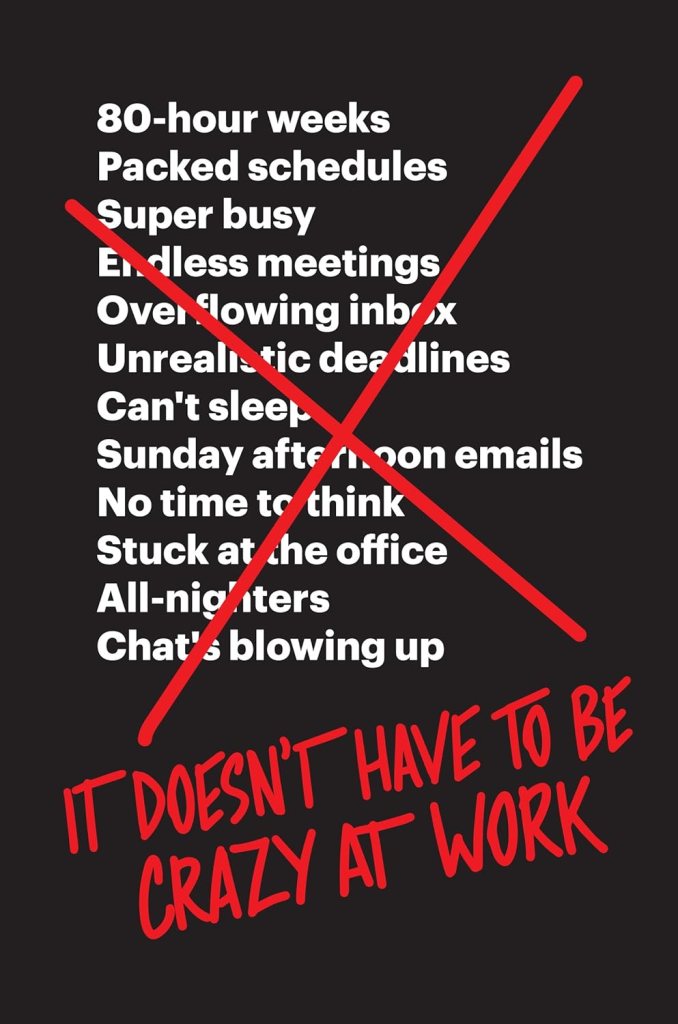
Chaos shouldn’t be the natural state at work. Anxiety isn’t a prerequisite for progress. Sitting in meetings all day isn’t required for success. These are all perversions of work — side effects of broken models and “best” practices.
From the Amazon writeup: In Rework, Jason Fried and David Heinemeier Hansson introduced a new path to working effectively. Now, they build on their message with a bold, iconoclastic strategy for creating the ideal company culture—what they call “the calm company.” Their approach directly attack the chaos, anxiety, and stress that plagues millions of workplaces and hampers billions of workers every day.
Long hours, an excessive workload, and a lack of sleep have become a badge of honor for modern professionals. But it should be a mark of stupidity, the authors argue. It’s time to stop celebrating Crazy, and start celebrating Calm, Fried and Hansson assert.
Fried and Hansson have the proof to back up their argument. “Calm” has been the cornerstone of their company’s culture since Basecamp began twenty years ago. Destined to become the management guide for the next generation, It Doesn’t Have to Be Crazy at Work is a practical and inspiring distillation of their insights and experiences. It isn’t a book telling you what to do. It’s a book showing you what they’ve done—and how any manager or executive no matter the industry or size of the company, can do it too.
Reinventing Organizations: A Guide to Creating Organizations Inspired by the Next Stage in Human Consciousness, by Frederic Laloux
From the Amazon writeup: The way we manage organizations seems increasingly out of date. Survey after survey shows that a majority of employees feel disengaged from their companies. All these organizations suffer from power games played at the top and powerlessness at lower levels, from infighting and bureaucracy, from endless meetings and a seemingly never-ending succession of change and cost-cutting programs.
Deep inside, we long for soulful workplaces, for authenticity, community, passion, and purpose. We need more enlightened leaders, but we need something more: enlightened organizational structures and practices. But is there even such a thing? Can we conceive of enlightened organizations?
The pioneering organizations researched for this book have already “cracked the code.” Their founders have fundamentally questioned every aspect of management and have come up with entirely new organizational methods. Reinventing Organizations describes in practical detail how organizations large and small can operate in this new paradigm. Leaders, founders, coaches, and consultants will find this work a joyful handbook, full of insights, examples, and inspiring stories.
Bonus:
- Reinventing Organizations Wiki: a practical guide for leaders who are reinventing their organization and are looking for inspiration as they upgrade specific management practices in their organization.
- Interview with the author
Brave New Work: Are You Ready to Reinvent Your Organization? by Aaron Dignan
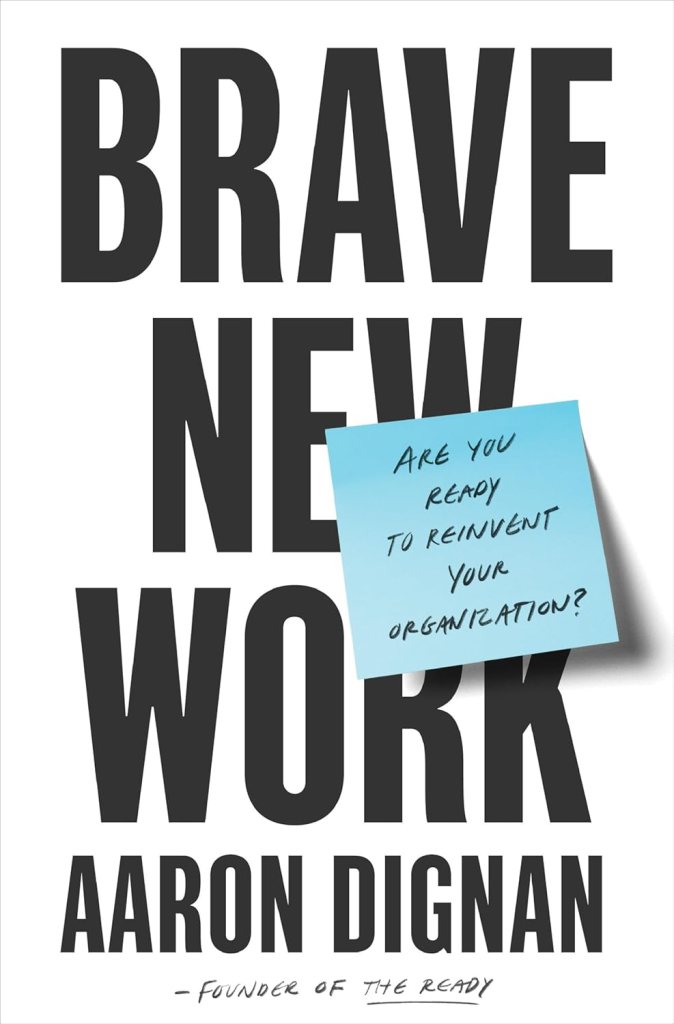
“It’s the way we work. Bureaucracy. Hierarchy. Compliance. Everything that slows us down and makes us feel less human. Our organizations are broken. And we can fix them.”
From the book’s website: Aaron Dignan helps teams around the world see that organizations aren’t machines to be predicted and controlled. They’re complex human systems full of potential waiting to be released. In Brave New Work, you’ll learn exactly how to reinvent the way you work, not through top-down mandates, but through a groundswell of autonomy, trust, and transparency.
Book summary (video)
Let My People Go Surfing: The Education of a Reluctant Businessman–Including 10 More Years of Business, by Yvon Chouinard
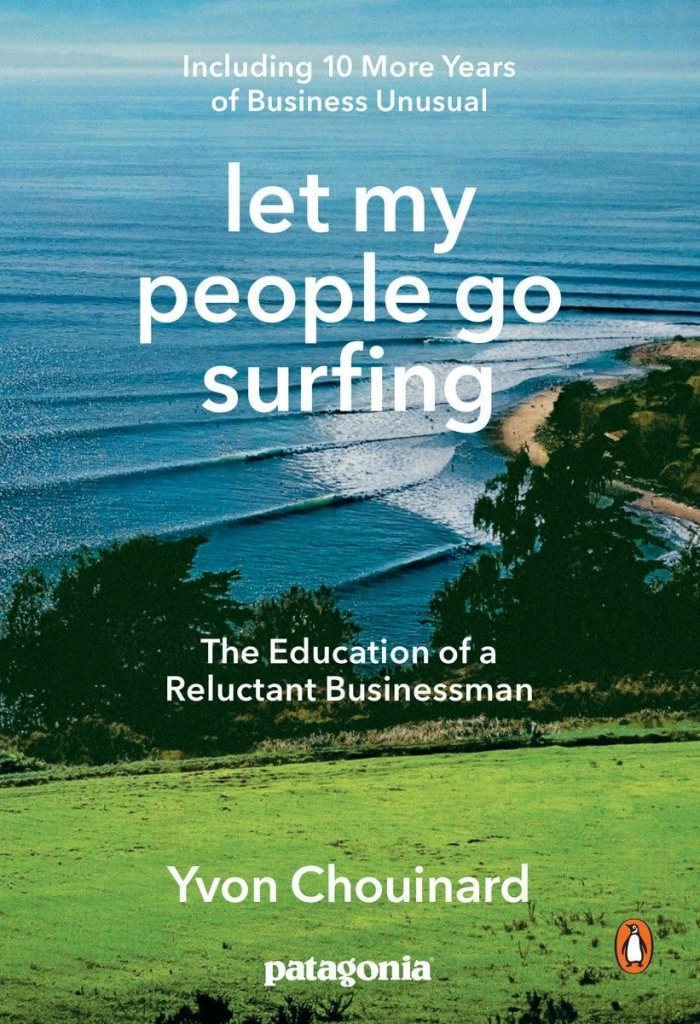
French Canadian Patagonia Founder Yvon Chouinard didn’t set out to be a businessperson. He grew up wanting to be a fur trapper. He’s responsible for starting what would ultimately become one of the most successful and well-regarded outdoor clothing brands.
The book illustrates how to run a successful business while remaining deeply committed to sustainability and personal fulfillment in the outdoors. It is the story of a man who brought doing good and having grand adventures into the heart of his business life-a book that will deeply affect entrepreneurs and outdoor enthusiasts alike.
Besides learning about Chouinard’s passion for the outdoors and environmental activism, you’ll learn about Patagonia’s “flex time” philosophy of enabling employees to take time off to pursue outdoor activities when conditions are optimal, as long as work gets done. And, he openly discusses his struggles with balancing business growth with ethical principles, emphasizing quality over quantity and prioritizing long-term sustainability
15 min video summarizing the book
Freedom, Inc.: How Corporate Liberation Unleashes Employee Potential and Business, by Mr. Brian M Carney and Isaac Getz
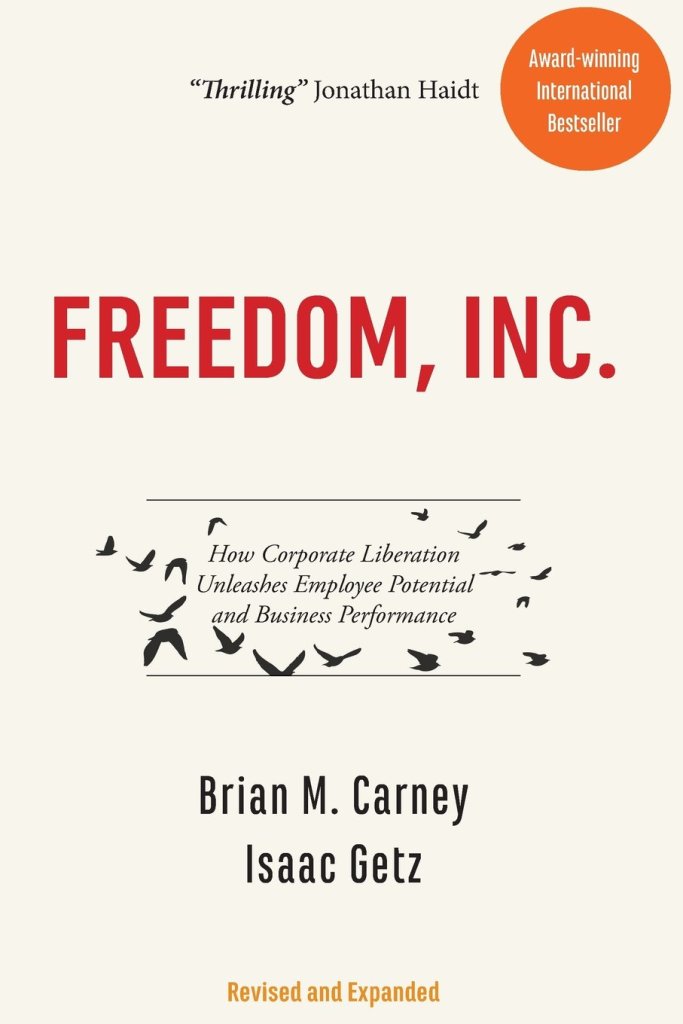
From Freedom, Inc’s website:
Liberating leaders believe that a workplace based on respect and freedom is a more natural environment than one based on mistrust and control.
Most liberated companies have been small and medium size-though some have grown tremendously since. Yet increasingly, multinationals such as Michelin or Decathlon-operating in Europe, America and Asia-are joining the corporate liberation movement that pioneers such as W.L. Gore and USAA began. Vineet Nayar has liberated an Indian high-tech giant and L. David Marquet, a U.S. nuclear submarine.
Leaders of organizations of all sizes and types are shedding their hierarchies and bureaucracies and transforming them into respect- and freedom-based workplaces. Every morning their employees go to work, but many prefer to say they go to have fun-pursuing a common dream using their own initiative.
Maverick: The Success Story Behind the World’s Most Unusual Workplace, by Ricardo Semler
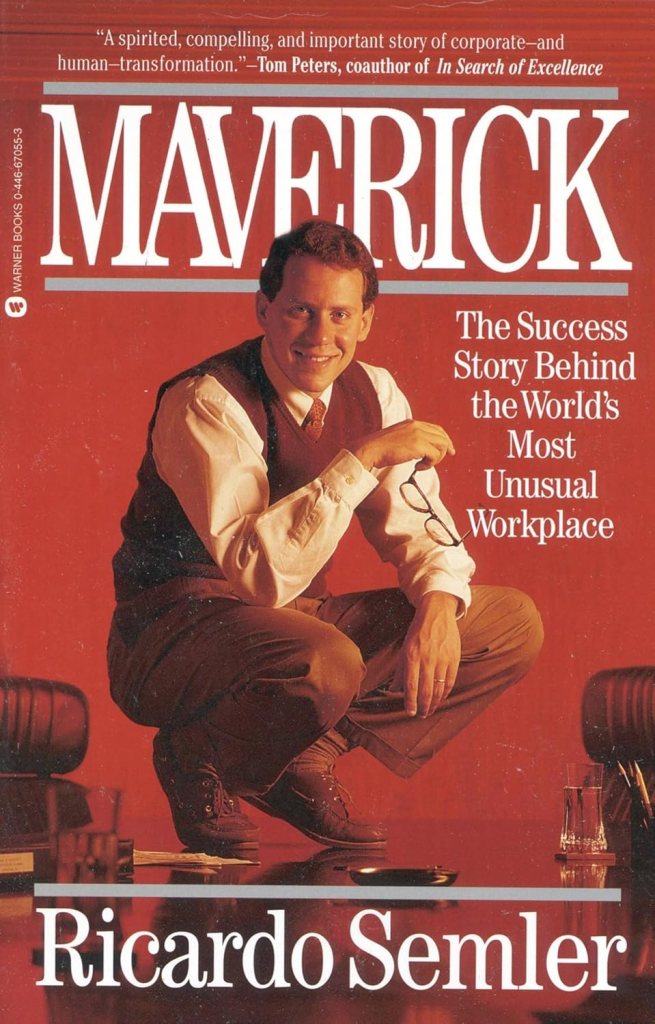
Semler is the son of an entrepreneur who entered the family business and transformed it into a multibillion-dollar business empire. What is unusual is the way he developed management, labour relations and the work environment to achieve these goals. His radical policies are summed up as cartoons in a ‘Semco Lexicon’ and a ‘Survival Manual’ for the employees. Starting out as a manufacturing company, Semco allowed its workers to set their own production quotas and found that employees would voluntarily work overtime to meet them. Profit sharing is practiced right down to factory floor level, instead of large bonuses only for senior management. The company seeks to streamline and simplify processes and avoid complicated business regulations. Semler created an environment, which can essentially work without him and it made Maverick! into a worldwide bestseller. (note)
Bonus:
- Article – 7 takeaways from the book
- Ricardo Semler Interview | The Tim Ferriss Show (Podcast)
The Case for Good Jobs: How Great Companies Bring Dignity, Pay, and Meaning to Everyone’s Work, by Zeynep Ton
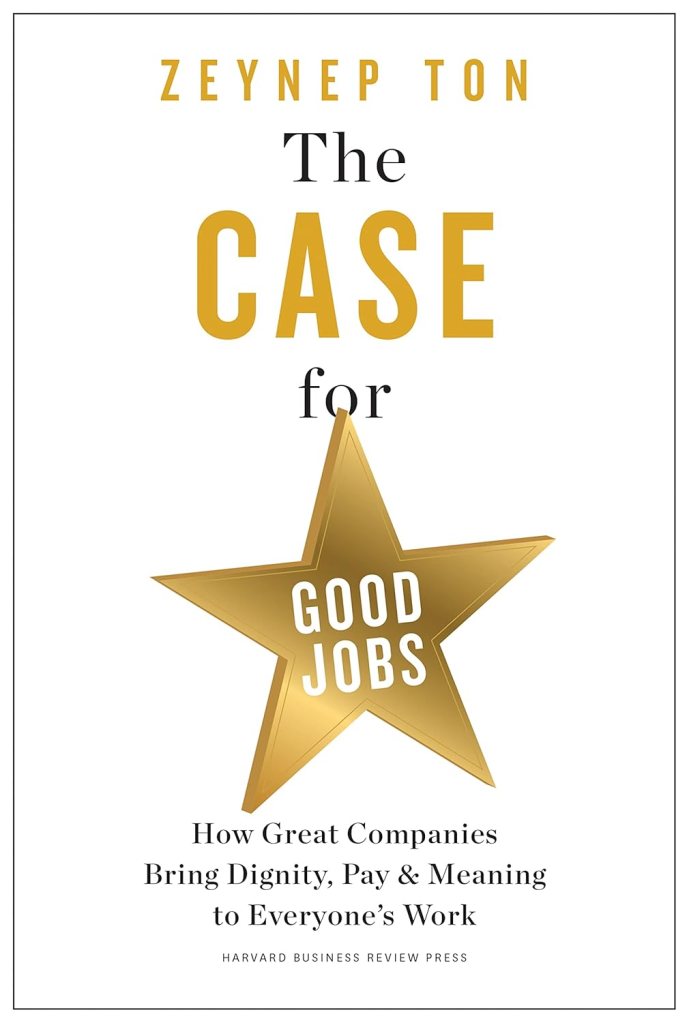
This is a follow-up to the author’s previous book “The Good Jobs Strategy”. Ton examines the why and how of the “good jobs system” to help leaders overcome the disconnect between recognizing a better model and having the courage to implement it.
The book talks about the components of a good job system and the benefits this approach creates; how labor investments can pay for themselves; the obstacles to creating a good jobs system; and how leaders can break free and overcome these challenges to create good jobs that offer a living wage, dignity, and opportunities for growth to foster success for their employees and their organization.
Bonus:
- Interview with Zeynep Ton – 5 key insights from the book – including Mental models that produce excellence; the risk of making system change is much lower than the risk of the status quo.
- Article by the author, Zeynep Ton
Scaling People: Tactics for Management and Company Building, by Claire Hughes Johnson
From the book’s online writeup:
Scaling People is a practical and empathetic guide to being an effective leader and manager in a high-growth environment. The tactical information it puts forward—including guidance on crafting foundational documents, strategic and financial planning, hiring and team development, and feedback and performance mechanisms—can be applied to companies of any size, in any industry. Scaling People includes dozens of pages of worksheets, templates, exercises, and example documents to help founders, leaders, and company builders create scalable operating systems and lightweight processes that really work.
Implementing effective leadership and management practices takes effort and discipline, but the reward is a sustainable, scalable company that’s set up for long-term success. Scaling People is a detailed roadmap for company builders to put the right operating systems and structures in place to scale the most important resource a company has: its people.
🤕Case Studies: Unhealthy, high-performing
Noma, Rated the World’s Best Restaurant, Is Closing Its Doors
In January 2023, Noma, the acclaimed Copenhagen restaurant led by chef René Redzepi, announced it would close at the end of 2024, citing the unsustainable nature of fine dining. Despite its three Michelin stars and multiple recognitions as the world’s best restaurant, Noma faced criticism for relying on unpaid interns and fostering a demanding work environment.
This decision highlights broader challenges in the high-end restaurant industry, including labor exploitation and the viability of current business models. The closure has sparked discussions about the future of fine dining and the need for systemic change to ensure fair treatment and compensation for all restaurant workers.
Rise of the Worker Productivity Score
This NYT article delves into the increasing prevalence of employee monitoring systems across various industries. These systems, adopted by many large employers, utilize tools such as keystroke tracking, random computer screenshots, and even webcam photos to assess worker productivity.
While employers argue that these measures enhance efficiency and accountability, employees have raised concerns about privacy invasion, the reduction of their work to quantifiable metrics, and the potential for such monitoring to overlook the qualitative aspects of their roles.
The article highlights the tension between organizational objectives and individual autonomy, emphasizing the need for a balanced approach to productivity assessment.
😀Case Studies: Healthy, high-performing
Buurtzorg Company Profile
Buurtzorg is a pioneering healthcare organisation established in 2006 with a nurse-led model of holistic care that has revolutionised community care in the Netherlands. Client satisfaction rates are the highest of any healthcare organisation.
Article: W.L. Gore (Gore-Tex) Culture
“The Gore culture at its heart is about the pleasure and satisfaction that comes from
working together and in ways free of too many rules and too many distractions —
when you can really move quickly and solve problems and make a lot of decisions. It’s
a great way of working together that brings out our human potential.”
— Bret Snyder, CEO & grandson of company founders
Leadership | EQ | Communication | Culture | Psychological Safety
Group Dynamics | Healthy, High-Performing Teams | RESOURCES HOME
 Annalise