
Back to Resources | Jump to Contents
On this page, you will find an overview of some of my favourite leadership resources, including the Neuroscience of Leadership.
Contents
- Leadership Foundations
- Dare to Lead, by Brené Brown
- Unreasonable Hospitality: The Remarkable Power of Giving People More Than They Expect, by Will Guidara.
- Leadership Is An Art, by Max Depree.
- Endurance: Shackleton’s Incredible Voyage, by Alfred Lansing.
- The Song of Significance: A New Manifesto for Teams, by Seth Godin.
- Rules for a Knight, by Ethan Hawke
- Developing Leadership Character, By Mary Crossan, Gerard Seijts, Jeffrey Gandz.
- Character: What Contemporary Leaders Can Teach Us about Building a More Just, Prosperous, and Sustainable Future, but Gerard Seijts and Kimberley Young Milani.
- Bonus Materials
- Neuroscience
Leadership Foundations
Books about human-focused, character based leadership (not even in the same ballpark as management)
Dare to Lead, by Brené Brown
Brené Brown described herself on her website as a researcher, storyteller, and Texan who’s spent the past two decades studying courage, vulnerability, shame, and empathy. She’s a research professor at the University of Houston, but not the stuffy kind! She brings her super-duper research into the real world with books that are such an easy read that you don’t realize how smart they’re making you!
I’m one of those people who believe Brené Brown is my own personal mentor. She’s been leading me for years. Every since her very first TED Talk on the power of vulnerability, I’ve watched her dig deep to do her own personal work, and share her precious life lessons with grace and courage.
And that’s what Dare to Lead is. It’s how to be brave enough to lean into the difficult conversations that are avoided by mediocre and even many good leaders. It starts with the inner work that leaders need to do if they are to be great: let down the defenses, be imperfect, make mistakes. In my experience, this requires a lot of self-empathy!
There’s a whole section on shame and empathy in the book, because shame shows up in the workplace all the time. What it manifests as is perfectionism, favoritism, gossiping, harassment, discrimination, etc. The antedote? Empathy.
From the book’s very own website:
When we dare to lead, we don’t pretend to have the right answers; we stay curious and ask the right questions. We don’t see power as finite and hoard it; we know that power becomes infinite when we share it with others. We don’t avoid difficult conversations and situations; we lean into vulnerability when it’s necessary to do good work. But daring leadership in a culture defined by scarcity, fear, and uncertainty requires skill-building around traits that are deeply and uniquely human. The irony is that we’re choosing not to invest in developing the hearts and minds of leaders at the exact same time as we’re scrambling to figure out what we have to offer that machines and AI can’t do better and faster. What can we do better? Empathy, connection, and courage, to start.
Brown also covers being brave enough to trust other people (she also has a podcast episode on this). She goes deep and detailed! Things like setting healthy boundaries, accountability, transparency, integrity, generosity. And just when you’re wondering if this is a leadership book or a therapy book, the answer is yes! Great, healthy humans who do their own deep personal work make great leaders.
So of course the last section is on dealing with our own emotions, especially pain. Are we going to avoid it and push it down until we explode? Or offload it onto other people? Inauthentic positivity? We can all think of leaders who did this, and it doesn’t feel good to be around them.
The part of the book that I probably turn to the most often is about what Brené Brown calls (and practices as part of her organization’s culture) The Rumble. This is all about having tough and real conversations. Call it feedback, difficult conversations, bringing up uncomfortable topics, deeply considering culture, leading through conflict, or mediation.
This section includes a great list of Rumble language: one-liners and conversation starters that help us stay in curiosity and provide others with the gift of feeling seen, heard and understood.
A rumble is a discussion, conversation, or meeting defined by a commitment to lean into vulnerability, to stay curious and generous, to stick with the messy middle of problem identification and solving, to take a break and circle back when necessary, to be fearless in owning our parts, and, as psychologist Harriet Lerner teaches, to listen with the same passion with which we want to be heard.
More than anything else, when someone says, “Let’s rumble,” it cues me to show up with an open heart and mind so we can serve the work and each other, not our egos.
Bonus Materials on Dare to Lead
- Brené Brown also has a Dare to Lead podcast, and she spends two episodes talking all about the concepts in the book Part 1 and Part 2.
- Click here for a written summary of Dare to Lead
- “Dare to Lead Hub” – leadership assessment, read-along videos, resources (workbook, glossary, and art), help operationalizing your values, finding facilitators, etc.
Unreasonable Hospitality: The Remarkable Power of Giving People More Than They Expect, by Will Guidara.
At the age of 26, Will Guidara took over Eleven Madison Park, a struggling two-star restaurant that had never quite lived up to its majestic space. Some 11 years later, EMP was named the best restaurant in the world.
“Today, every business can choose to be a hospitality business—and we can all transform ordinary transactions into extraordinary experiences. Featuring sparkling stories of his journey through restaurants, with the industry’s most famous players like Daniel Boulud and Danny Meyer, Guidara urges us all to find the magic in what we do—for ourselves, the people we work with, and the people we serve.”
I love this quote from the book’s website because one of my personal definitions of leadership is leadership is relationships:
“If you’re here it means that you believe, as we do, that how we serve is as valuable as what we serve — and that you’ve made the choice to be unreasonable, not just in pursuit of product, but also in pursuit of people. We’ve spent our careers doing just that — being intentional and creative in pursuit of relationships. We are so excited to invite you into our world and teach you the many things we’ve learned along the way.”
Leadership Is An Art, by Max Depree.
Considering this book was first published in 1989, it is way ahead of its time. The author looks at leadership as a kind of stewardship, stressing the importance of building relationships, initiating ideas, and creating a lasting value system within an organization. This is not at all the leadership philosophy I was first introduced to in the Army of the 1990s.
From the book’s website: He shows that the first responsibility of a leader is to define reality and the last is to say thank you. Along the way, the artful leader must:
- Stimulate effectiveness by enabling others to reach both their personal potential and their institutional potential
- Take a role in developing, expressing, and defending civility and values
- Nurture new leaders and ensure the continuation of the corporate culture
Endurance: Shackleton’s Incredible Voyage, by Alfred Lansing.

“One of the best adventure books ever written” (Wall Street Journal). And while yes, this is the harrowing tale of British explorer Ernest Shackleton’s 1914 attempt to reach the South Pole, it’s also a master class in leadership.
Twenty-eight men survived for nearly two years, including after their ship was crushed by ice floes in the Weddell Sea. How? Dr. Amy Climer argues it was by modeling and inspiring optimism; developing a clear, shared purpose; building unity and commitment within the team; planning yet remaining flexible; and making tough decisions.
There is no record of interpersonal drama or disciplinary issues among the crew, despite the extremely stressful ordeal.
The Song of Significance: A New Manifesto for Teams, by Seth Godin.

This book is different from all the other leadership books!
Here’s an excerpt from the book’s website:
Economic instability and the rise of remote work have left us disconnected and disengaged. Alarmed managers are responding with harsh top-down edicts, layoffs, surveillance and mandatory meetings. Workers are responding by quiet quitting and working their wage. But it doesn’t have to be this way.
Through 144 provocative stanzas, legendary business author Seth Godin gets to the heart of what ails us; he shows what’s really at the root of these trends, and challenges us to do better in ways that matter.
The choice is simple. We can endure the hangover of industrial capitalism, keep treating people as disposable, and join in the AI-fueled race to the bottom. Or we come together to build a significant organization that enrolls, empowers, and trusts everyone to deliver their best work, no matter where they are.
This is a book to share with bosses and co-workers, to discuss and put to action. No matter what our role, it’s within our power to change. Because, as Godin writes, “Humans aren’t a resource. They are the point.”
Seth Godin did a talk at Google about it.
Rules for a Knight, by Ethan Hawke

Rules for a Knight by Ethan Hawke is a philosophical novel presented as a letter from a fictional 15th-century knight, Sir Thomas Lemuel Hawke, to his children.
Through a series of short, reflective chapters, the book outlines a set of virtues and principles essential to living a noble and honorable life. These rules, such as humility, courage, patience, and gratitude, serve as moral guidelines, blending medieval chivalry with timeless wisdom.
Written in a simple yet poetic style, the book offers insights on personal growth, integrity, and the importance of service to others, making it both a guide to ethical living and a meditation on the human experience.
Bonus if you’re not a hard-core reader: this one is extremely short! And yet so rich.
Developing Leadership Character, By Mary Crossan, Gerard Seijts, Jeffrey Gandz.
After the financial crash of 2008, researchers asked what would have made the difference. Time and again, they heard about how leader character would have made the difference. As I’ve said while addressing military culture, leaders have to do better than not breaking the law. The legal standard is an extremely low bar: don’t be a criminal. That standard won’t help us build better leaders, but character will.
The research explored four central questions:
- What went wrong with leadership that contributed to the 2008-2009 financial crisis?
- Was the problem confined to the few organizations at the epicenter of the crisis or was it widespread in both private and public sectors?
- What can we learn from those organizations and leaders who anticipated the crisis and avoided it or who coped well throughout?
- What do we need to do to prepare the current generation of leaders to deal with the kinds of challenges that they will face in the future?
The research identified 11 virtues, or what they called character dimensions:
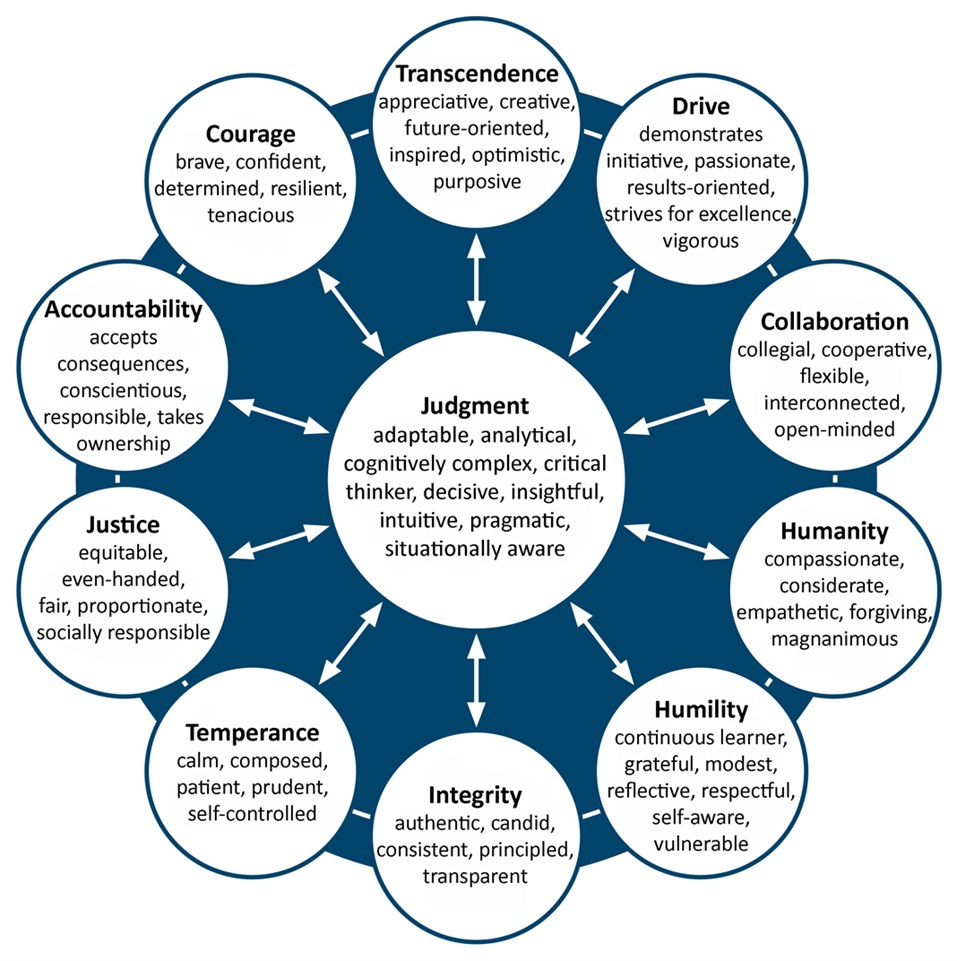
This model of character-based leadership is one of two that has been adopted by the Canadian Armed Forces in its latest leadership doctrine. The research also concluded that character can be developed and measured. Any of the the 11 dimensions can be lacking or can be so overdone that it becomes a “vice” (for example, too much Drive can make you a tyrant).
Character: What Contemporary Leaders Can Teach Us about Building a More Just, Prosperous, and Sustainable Future, but Gerard Seijts and Kimberley Young Milani.
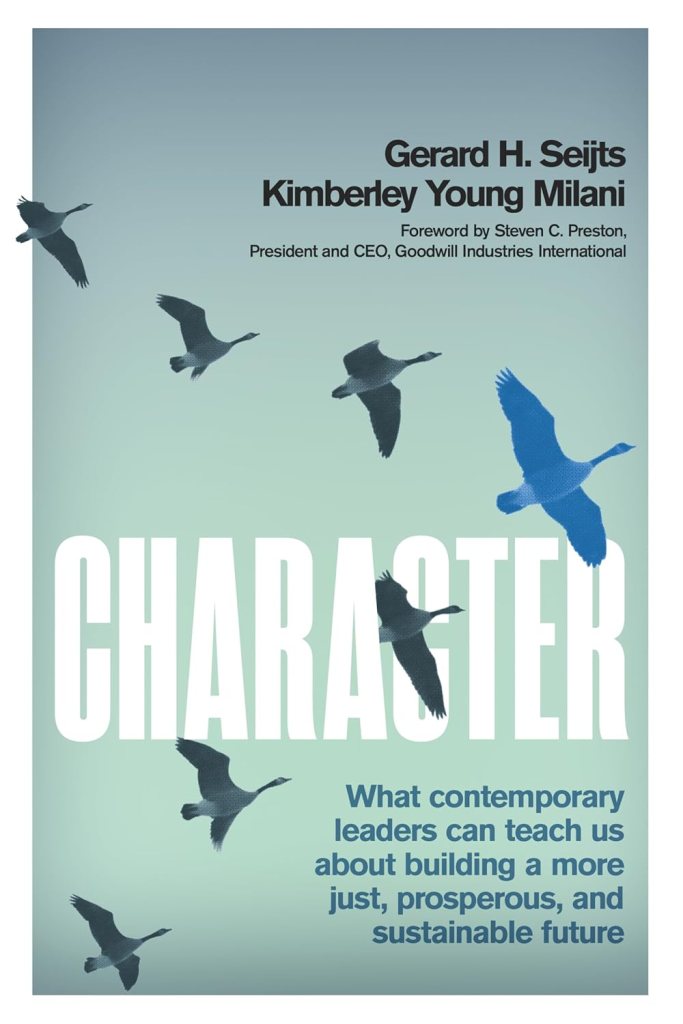
Following from the research of the above book (Developing Leadership Character), this one provides contemporary examples of leaders who are actually putting it into practice.
Bonus Materials
Great leaders balance high challenge with high support, by Annalise Tower
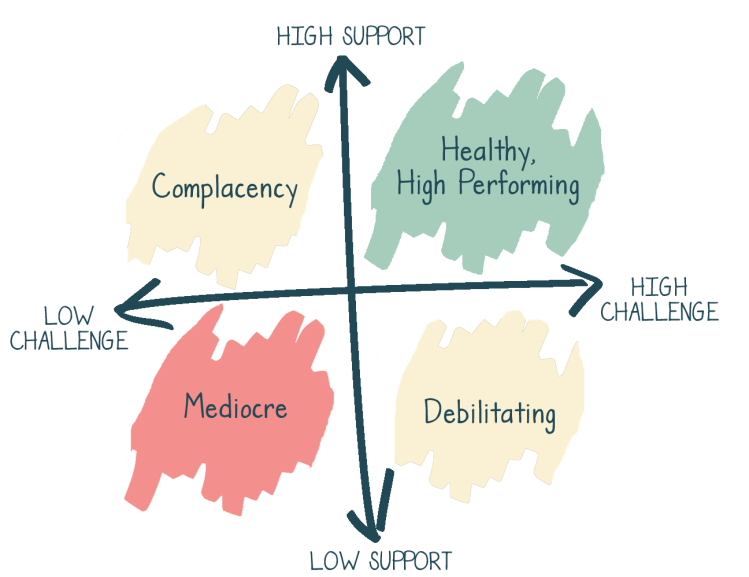
I wrote an article to summarize this idea, along with the “Support-Challenge Matrix” developed by Ian Day and John Blakey and some real world examples of leaders who do this extremely well. As a result, they foster a healthy culture of high performance.
This builds on the article I previously wrote about how great leaders create a safe container in which people can grow and learn.
Build your leadership legacy: The Coaching Tree
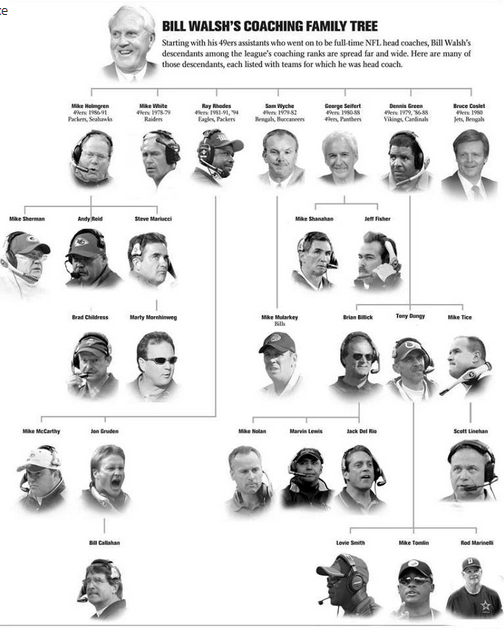
Coaching trees are common in the National Football League and most coaches in the NFL can trace their lineage back to a certain head coach for whom they previously worked as an assistant.
For example, In 1998, half of the active head coaches in the National Football League could be traced to Bill Walsh and Tom Landry. Of those fifteen coaches, four (plus Walsh and Landry) had coached a Super Bowl winning team.
Who is in your leadership family tree?
Leadership vs Management
The simplest distinction is this: We lead people. We manage things.
In any organization, management behaviors and leadership behaviors are required daily to ensure that both a healthy culture and high-performance is maintained. There are many great managers who, despite their job title, think and act like leaders, and while executing many of the descriptors in the management column, also embody the descriptors in the leadership column. That said, it is valuable to mark a distinction between when and where those different behaviors and skill sets are leveraged.
We manage things such as programs, budgets, contracts, projects and processes, but we should be leading people.
The idea of ‘managing’ people just sounds demeaning in the 21st century.
~Terina Allen
Article: What Is The Difference Between Management And Leadership? by Terina Allen
Venn Diagram of Leadership vs Management, by Tom Geraghty
Conductor Benjamin Zander: “I realized that my job is to awaken possibility in others.”
Benjamin Zander, conductor of the Boston Philharmonic Orchestra, is one of the world’s most well known classical musicians and is a source of profound inspiration to many people. He is a deeply insightful conductor, a master teacher of music, and an engaging speaker on leadership.

The conductor of an orchestra doesn’t make a sound. He depends, for his power, on his ability to make other people powerful.
Here’s a really great interview called “Leading From Any Chair” with Zander, where he talks about his leadership philosophy. It really illustrates what you see in this image on the right: the conductor (leader) might be the most powerful person in the photo, even though the audience sees every face but his.
Leadership | EQ | Communication | Culture | Psychological Safety | Group Dynamics | Healthy, High-Performing Teams | RESOURCES HOME
Neuroscience
Neuroscience: because leadership isn’t just a social science.
Your Brain at Work: Strategies for Overcoming Distraction, Regaining Focus, and Working Smarter All Day Long, by David Rock.
This book is geared toward the individual level, but leaders can use it to help create the conditions for other people to thrive. Understanding more about how the brain works allows us to better organize, prioritize, recall, and sort our daily lives.
Topics that particularly relate to leaders include:
- how to keep your cool in any situation, so that you can make the best decisions possible
- how to collaborate more effectively with others
- why providing feedback is so difficult, and how to make it easier
- how to be more effective at changing other people’s behavior
Also check out the Your Brain At Work podcast.
Quiet Leadership: Six Steps to Transforming Performance at Work, by David Rock.
David Rock comes at this from the perspective of helping people think better, not telling them what to do. He says, “If people are being paid to think, isn’t it time the business world found out what the thing doing the work, the brain, is all about?”
David Rock explains in this 3-min video why he wrote the book.
Bonus materials:
- An article I wrote as an overview of the neuroscience of psychological safety (the creation of which is one of the leader’s most important tasks.
- A way longer and better article by David Rock himself and Jeffrey Schwartz, co-founder of the Neuroleadership field and an expert in brain plasticity.
- David Rock’s SCARF model, which explains the five key “domains” that influence our behavior in social situations (and how leaders can use this information to help others).
- A great article by scrum.org with practical examples of how to apply the SCARF model
Leadership | EQ | Communication | Culture | Psychological Safety
Group Dynamics | Healthy, High-Performing Teams | RESOURCES HOME
 Annalise